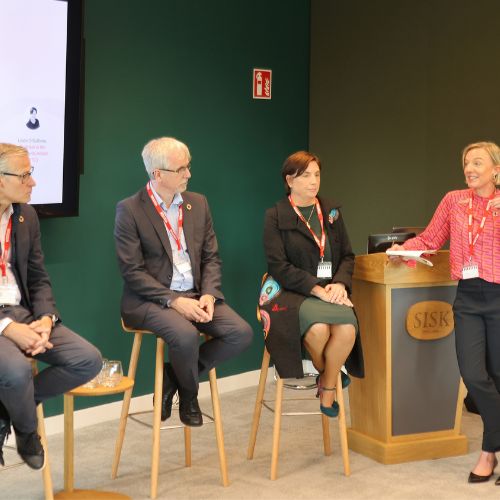
Engineers urged to improve communication with ‘non-technical audiences’
Engineers must improve how they communicate with non-technical audiences, according to David Porter, the newly appointed President of the Institution of Civil Engineers (ICE).
Speaking at his inaugural address on 10 November 2025, Porter emphasised that while technical detail is vital, engineers must focus more on the services and benefits infrastructure provides to society.
“The engineering is hugely important, but it’s actually the service that is provided by infrastructure that the public want to hear about,” Porter said during a discussion with broadcaster Steph McGovern.
From Technical Focus to Public Impact
Porter reflected on an early experience as a graduate engineer presenting at a government meeting in Northern Ireland.
“I was ready with all the technical details – the concrete strength, the rebar sizes – but instead they wanted to talk about how the lady up the street couldn’t get to play bridge because the road was going to be closed,” he recalled.
That encounter, he said, showed him that people engage with infrastructure because of the impact it has on their lives, not the engineering specifications behind it.
Promoting the ‘Informed Client’
Porter is the first infrastructure client to become ICE president in nearly a decade. As Chief Highway Engineer for Northern Ireland and former Chief Executive of Rivers Agency, he brings experience from both delivery and client-side roles.
He used his address to promote the idea of an ‘informed client’ – a concept he prefers over the traditional ‘intelligent client’.
“An informed client really understands the consequences of their decisions and how the system works,” he said.
While this approach does not guarantee success, Porter argued it increases the likelihood of positive outcomes and helps organisations make difficult choices on major challenges such as achieving net zero carbon targets.
READ MORE: Russell Roof Tiles Secures HSBC UK Funding to Drive Growth

Engineers urged to communicate with public
Closing the Engineering Skills Gap
During the address, McGovern asked Porter about the ICE’s role in addressing the skills shortage in engineering. Porter pointed to the institution’s work as a knowledge hub for industry professionals, citing the annual State of the Nation report, which this year warned about the deteriorating state of the UK’s ageing infrastructure.
He said the ICE’s wider activities – including professional development, guidance, and research – help ensure engineers remain competent, informed, and ready to meet future challenges.
Porter also addressed the rise of artificial intelligence, stressing the ICE’s responsibility to help the profession use new technologies ethically and effectively.
Encouraging Member Engagement
Porter encouraged engineers at all stages of their careers to get involved with the ICE, noting that his own journey – from regional chair to president – had been shaped by active participation in the institution.
“The more you put into the ICE, the more you get back,” he said. “There’s a place for you here, in the ICE.”
New Five-Year Strategy and Future Leaders
Porter also introduced the ICE’s new five-year strategy, which will guide the institution’s response to global challenges such as climate change, infrastructure resilience, and sustainability.
As part of his presidency, Porter announced the six members selected as President’s Future Leaders for 2025–26.
The initiative offers early-career engineers the chance to contribute to key ICE projects and leadership programmes.
The 2025 President’s Future Leaders are:
-
Aman Khandelwal, Flood Risk and Hydraulic Engineer, Tetra Tech
-
Ellie Carter, Civil Engineering Degree Apprentice, AtkinsRéalis
-
Hora Behnejad, Graduate Engineer, WSP
-
Inés Cava, Assistant Structural Engineer, AtkinsRéalis
-
Jacob Bates, Engineering Degree Apprentice, JBA Consulting
-
Sonali Patel, Graduate Engineer, Tony Gee and Partners